Views: 0 Author: Site Editor Publish Time: 2026-10-16 Origin: Site


Medical and dental instruments often contain narrow gaps, joints, and complex surfaces that are difficult to clean through traditional methods. Although manual cleaning can remove visible residues, it may not completely reach hidden areas where contaminants remain.
So, does ultrasonic cleaning really work? The answer is yes. Ultrasonic cleaners use high-frequency sound waves to generate microscopic bubbles in a cleaning solution. When these bubbles collapse, they create a gentle but powerful cleaning effect called cavitation, which helps remove contaminants from difficult-to-reach surfaces.
This article explains how ultrasonic cleaning works, why it is effective, where it is used, and how healthcare facilities can select suitable ultrasonic cleaning equipment.
Ultrasonic cleaning is an automated cleaning method that uses sound energy and liquid solutions to remove contaminants from instruments and equipment. Unlike manual cleaning methods that rely on physical brushing, ultrasonic cleaners use millions of microscopic bubbles to create a consistent cleaning effect across the entire instrument surface.
The technology works through ultrasonic transducers installed in the cleaning tank. These transducers convert electrical energy into high-frequency vibrations, which travel through the cleaning liquid and create alternating pressure changes. These pressure changes produce tiny bubbles that expand and collapse rapidly, generating localized cleaning forces around the instrument.
This cavitation process helps remove dirt, biological residues, oil, and particles from areas that are difficult to access manually. For medical instruments with complex structures, ultrasonic cleaning provides a more efficient and repeatable cleaning solution before sterilization.
YESON MEDICAL DEVICE provides professional ultrasonic cleaning solutions designed for medical, dental, and laboratory applications, helping facilities improve instrument preparation efficiency before sterilization.
The main principle behind ultrasonic cleaning is cavitation. When high-frequency sound waves pass through a liquid, they create millions of microscopic bubbles that continuously expand and collapse.
During the collapse process, these bubbles release energy near the instrument surface. This creates small pressure changes and micro-cleaning forces that loosen contaminants without damaging most suitable materials.
The effectiveness of ultrasonic cleaning depends on several important factors:
Factor | Function |
|---|---|
Ultrasonic frequency | Controls bubble formation and cleaning intensity |
Cleaning solution | Helps dissolve and remove contaminants |
Temperature | Improves cleaning efficiency |
Processing time | Determines exposure and cleaning results |
When these factors are properly controlled, ultrasonic cleaners can provide stable cleaning performance for instruments with complicated structures.
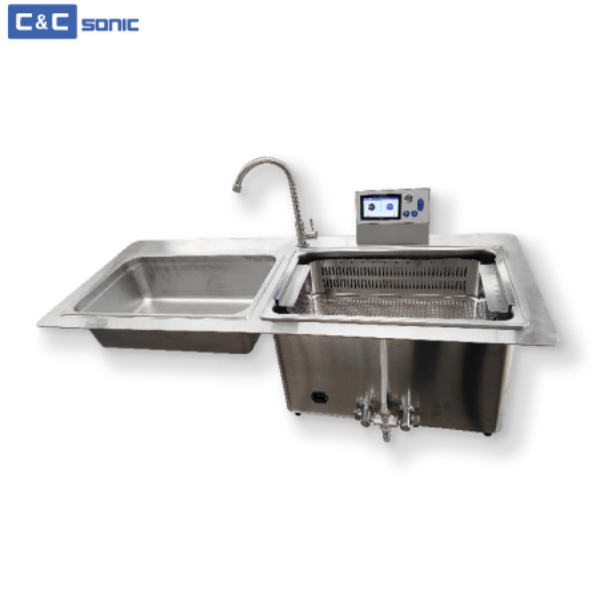
Cavitation is the key reason why ultrasonic cleaning works effectively. Without cavitation, ultrasonic equipment would only create vibration without producing the microscopic cleaning action needed for contamination removal.
When bubbles collapse near instrument surfaces, they create small areas of high-energy movement that help separate residues from the surface. This effect is especially useful for instruments with joints, grooves, and small openings where manual cleaning tools may not reach effectively.
For healthcare applications, this advantage is important because even small amounts of remaining residue may affect later sterilization performance. By improving the initial cleaning process, ultrasonic equipment helps prepare instruments for safer sterilization procedures.
Tip:
The best ultrasonic cleaning results come from combining suitable equipment, correct cleaning solutions, proper loading methods, and appropriate processing time.
Ultrasonic cleaning is highly effective for removing many types of contaminants, but its performance depends on the equipment configuration, cleaning solution, and application requirements.
It can remove various residues, including:
Blood and biological materials
Dust and particles
Oil and grease
Surface contamination
Small residues in instrument gaps
However, ultrasonic cleaning is not the same as sterilization. It focuses on removing contaminants and preparing instruments, while sterilizers use controlled heat, pressure, or other methods to eliminate microorganisms after cleaning.
In medical environments, ultrasonic cleaning and sterilization are usually combined as part of a complete instrument processing workflow. Cleaning improves sterilization efficiency because it removes materials that may protect microorganisms from sterilization conditions.
Manual cleaning remains common in many facilities, but it has limitations when instruments have complex structures. Operators may struggle to clean narrow gaps, internal surfaces, and small mechanical parts using traditional methods.
Ultrasonic cleaners provide a more consistent solution because cavitation occurs throughout the cleaning liquid. This allows multiple surfaces to be cleaned at the same time while reducing dependence on manual brushing techniques.
Medical and dental instruments often include joints, grooves, and detailed surfaces that collect residues during use. These areas can be difficult to inspect and clean completely through manual methods.
Ultrasonic cleaning helps improve cleaning consistency by allowing microscopic bubbles to reach difficult areas. This makes it especially useful for dental tools, surgical instruments, and laboratory equipment.
YESON MEDICAL DEVICE provides Ultrasonic Cleaner C9, designed for professional cleaning applications where reliable contamination removal and efficient instrument processing are required.
Manual cleaning requires significant labor, especially in facilities that process large numbers of instruments every day. It also depends heavily on operator experience and cleaning procedures.
Ultrasonic cleaners automate the cleaning process and help standardize results. Staff can process multiple instruments in one cycle while spending less time on repetitive cleaning tasks.
This improves workflow efficiency and allows healthcare professionals to focus on other important preparation and patient-care activities.
Ultrasonic cleaning technology is widely used in healthcare environments where instruments require detailed cleaning before sterilization.
Dental clinics are one of the most common applications for ultrasonic cleaners because dental instruments often have small surfaces and complex structures.
During dental procedures, instruments may collect biological residues that require thorough removal before sterilization. Manual cleaning may not fully reach narrow areas, especially around joints and detailed instrument surfaces.
Ultrasonic cleaners help dental teams improve cleaning consistency, reduce manual effort, and create a more efficient instrument processing workflow.
YESON MEDICAL DEVICE provides Ultrasonic Cleaner C5, suitable for dental clinics and medical environments requiring reliable instrument cleaning performance.
Hospitals process a wide range of reusable instruments every day. Effective cleaning is necessary before sterilization because remaining residues may affect sterilization results.
Ultrasonic cleaners are commonly used for:
Surgical instruments
Medical tools
Precision equipment
Reusable devices
For facilities with higher instrument processing requirements, cleaning capacity, tank size, and operating efficiency become important purchasing considerations.

YESON MEDICAL DEVICE provides Ultrasonic Cleaner C7 Large Capacity Dual Tank Hospital Laboratories, designed for applications that require larger cleaning capacity and efficient instrument processing.
Laboratories require reliable cleaning processes because contamination may affect testing accuracy and equipment performance.
Ultrasonic cleaners help remove residues from laboratory tools, glass equipment, and precision components. Their ability to clean complex surfaces makes them useful for research and testing environments where consistent cleanliness is important.
Although ultrasonic cleaning is an effective technology, several factors determine the final cleaning performance. Proper equipment selection and operation are essential for achieving stable results.
The cleaning solution directly affects how effectively contaminants are removed. Different residues require different chemical properties, so facilities should select solutions based on instrument materials and contamination types.
An unsuitable cleaning solution may reduce cleaning performance or damage sensitive instruments. Therefore, operators should consider material compatibility, residue characteristics, and manufacturer recommendations.
Ultrasonic frequency affects the size and behavior of cavitation bubbles. Different frequencies provide different cleaning characteristics.
Lower frequencies usually create stronger cleaning effects, while higher frequencies may provide gentler cleaning for delicate components. The correct balance depends on the instrument type and required cleaning intensity.
Proper loading is important because instruments must have enough contact with the cleaning solution.
Overloading the tank may reduce bubble movement and prevent cleaning energy from reaching all surfaces. Proper arrangement helps improve cleaning consistency and processing efficiency.
Note:
Following manufacturer operating instructions helps maintain ultrasonic cleaner performance and extends equipment service life.
Ultrasonic cleaning cannot replace sterilization because they serve different purposes.
Ultrasonic cleaners remove contaminants, while sterilizers are designed to eliminate microorganisms through controlled sterilization processes. In healthcare applications, both steps are important for safe instrument preparation.
A typical workflow includes:
Initial cleaning
Ultrasonic cleaning
Rinsing and drying
Sterilization
By combining ultrasonic cleaning with sterilization, healthcare facilities can improve instrument processing reliability and maintain better infection control procedures.
Choosing the right ultrasonic cleaner requires evaluating application requirements, instrument types, and daily processing volume.
Small dental clinics may need compact ultrasonic cleaners, while hospitals and laboratories may require larger-capacity models.
Facilities should evaluate:
Number of instruments processed daily
Cleaning frequency
Available workspace
Required processing speed
Selecting the correct capacity helps avoid workflow delays and improves operational efficiency.
Different instruments have different cleaning requirements.
Facilities should consider:
Instrument size
Material compatibility
Surface complexity
Contamination level
The right equipment can improve cleaning results and reduce unnecessary manual processing.
Modern ultrasonic cleaners may include features such as:
Digital controls
Heating functions
Timer settings
Multiple cleaning modes
These functions improve operation convenience and help users maintain consistent cleaning procedures.

YESON MEDICAL DEVICE provides a complete ultrasonic cleaner solution through its ULTRASONIC CLEANER series, supporting different medical and laboratory cleaning requirements.
Regular maintenance helps maintain cleaning performance and extend equipment lifespan.
Cleaning solutions collect removed contaminants during operation. If the solution becomes heavily contaminated, cleaning efficiency may decrease.
Regular replacement helps maintain a cleaner processing environment and improves cleaning consistency.
Residue buildup inside the tank may affect ultrasonic performance. Routine cleaning prevents contamination accumulation and supports stable operation.
Operators should regularly check:
Ultrasonic output
Heating performance
Control functions
Tank condition
Regular inspection helps identify potential problems before they affect daily workflows.
Ultrasonic cleaning really works because it uses cavitation technology to create microscopic cleaning forces that remove contaminants from difficult-to-reach surfaces. It is especially valuable for medical, dental, and laboratory instruments with complex structures.
However, ultrasonic cleaning is not a replacement for sterilization. Instead, it serves as an important preparation step that improves cleaning quality before instruments enter the sterilization process.
YESON MEDICAL DEVICE provides professional ultrasonic cleaning solutions, including ultrasonic cleaners designed for dental clinics, hospitals, and laboratories. With reliable technology, practical designs, and efficient cleaning performance, YESON helps healthcare facilities improve instrument processing efficiency and maintain safer working environments.
A: Yes. Ultrasonic cleaning uses cavitation technology to remove contaminants from instrument surfaces and difficult-to-reach areas.
A: No. Ultrasonic cleaners remove contamination, while sterilizers are required for complete sterilization.
A: Ultrasonic cleaning can reach small gaps and complex surfaces that are difficult to clean manually.
A: Ultrasonic cleaners are commonly used in dental clinics, hospitals, laboratories, and medical instrument processing facilities.
A: Ultrasonic cleaners should be cleaned, inspected, and maintained regularly according to manufacturer recommendations.