Views: 0 Author: Site Editor Publish Time: 2026-10-13 Origin: Site


Picture this: you are prepping for a busy morning of clinical procedures or critical lab experiments. Suddenly, a flashing error code halts everything, signaling a sudden equipment breakdown. A failed cycle does not just disrupt your daily schedule. It creates a cascading bottleneck of delayed operations and frustrated staff. Facility managers meticulously monitor pressure and cycle times to maintain efficiency. Yet, the most overlooked factor causing these catastrophic failures is the fluid fed directly into the system.
Poor liquid quality quietly damages internal components. It fundamentally ruins the efficacy of the entire sterilization process. In this comprehensive guide, we explore the hidden dangers of mineral accumulation. We will demonstrate how impurities compromise instrument integrity and explain why upgrading your purification protocols is a non-negotiable investment for the longevity of your practice.
Steam is strictly as pure as the source liquid: Any chemical impurities or dissolved minerals present in your reservoir transfer directly into the steam. This compromises the sterilization process and leaves hazardous residues on critical instruments.
Mineral accumulation destroys internal equipment: Hard water minerals, particularly calcium and magnesium, accumulate rapidly on heating elements and sensors. This leads to costly emergency repairs, poor temperature uniformity, and significantly shortened machine lifespans.
Instrument integrity is constantly at risk: Utilizing poor-quality liquid leaves harsh chemical residues behind. Over time, these residues cause irreversible pitting, rusting, and spotting on expensive medical and laboratory tools.
Not all sources are created equal: Understanding the scientific and practical differences between municipal tap sources, bottled purified options, and automated filtration systems is critical for maintaining long-term operational efficiency.
Proactive prevention is cheaper than repair: Investing in proper purification systems significantly reduces downtime, lowers maintenance costs, and ensures compliance with strict medical and laboratory guidelines.
Recent industry analyses reveal a massive shift in clinical sterilization protocols across the medical sector. Modern healthcare facilities are rapidly abandoning decentralized, manual water sourcing. Stricter compliance audits and escalating labor costs drive this operational change. The current trend strongly favors automated, point-of-use purification technologies. These advanced systems eliminate human error and guarantee a continuous, verifiable supply of ultra-pure feed liquid. Clinics today view advanced filtration not as an optional luxury, but as a baseline regulatory requirement to meet stringent international safety benchmarks.
To truly grasp why liquid purity matters, one must first dive into the thermodynamic mechanisms driving the chamber. Autoclaves do not merely heat items. They utilize the specific physical properties of saturated steam to achieve absolute sterility.
These machines use high-pressure saturated steam to rapidly denature the structural proteins of bacteria, viruses, and heat-resistant spores. For this physical process to function properly, the vapor must possess an exact moisture content. The ideal ratio consists of roughly 97 percent gas and 3 percent liquid.
This specific ratio ensures the vapor carries maximum latent heat. When this highly energetic steam contacts a cooler surface, such as a stainless steel surgical instrument, it immediately condenses. The phase change from a gaseous state back to liquid releases massive thermal energy directly into the microorganisms. This action coagulates their proteins and destroys them instantly. If the fluid used to generate this steam contains impurities, the moisture content and heat transfer capabilities drop drastically.
Thermodynamics dictates that impurities alter how liquids boil and how vapors carry heat. When a solution contains high levels of dissolved solids, its boiling point elevates. The resulting steam may become superheated or excessively wet.
Using pure Autoclave Water ensures optimal temperature uniformity throughout the chamber. Pure steam distributes heat evenly into every microscopic crevice of the loaded instruments. Conversely, impure steam carries microscopic mineral particles. These particles disrupt even heat distribution and create dangerous cold spots within the chamber where the required thermal threshold is never fully achieved.
Internal logic boards carefully monitor pressure and time parameters. However, the quality of the fluid fed into the reservoir often relies entirely on operator discretion. Defining what constitutes acceptable purity is the foundational step in protecting your expensive capital equipment.
Suitability for sterilization relies primarily on two intertwined metrics. These are Total Dissolved Solids and electrical conductivity.
Total Dissolved Solids: This measures the combined content of all inorganic and organic substances contained in a liquid. Sterilizers require fluid with an exceptionally low mineral count, typically under 3 to 5 parts per million.
Conductivity: Pure H2O acts as an excellent electrical insulator. Dissolved minerals conduct electricity. Therefore, low conductivity indicates high purity.
When these metrics rise above manufacturer thresholds, the fluid becomes highly unsafe for use due to the heavy, corrosive mineral load.
Municipal tap sources should never enter a sterilizer under any circumstances. While perfectly safe for human consumption, tap supplies contain a complex, unpredictable mixture of calcium, magnesium, chlorides, iron, and various silicates.
Imagine pouring a glass of tap water onto a hot skillet. The liquid vanishes rapidly and leaves behind a white, crusty ring. A similar phenomenon occurs inside the machine generator. Pure molecules vaporize, but the boiling process leaves all the heavy, harsh minerals behind in the reservoir, piping, and chamber. As this cycle repeats daily, the concentration of these minerals increases exponentially. It creates a highly corrosive sludge that relentlessly attacks internal components.
Ignoring operational guidelines inevitably leads to mechanical degradation. The physical damage caused by mineral deposits is cumulative. It often lurks unseen until a catastrophic, mid-cycle failure occurs.
When fluids containing dissolved calcium and magnesium are heated, these minerals precipitate out of the solution. They aggressively bond to the hottest surfaces they can find. This forms a hard, chalky, rock-like substance known as limescale, leading to severe Scale Buildup.
Inside the machine, this accumulation primarily targets heating elements and internal plumbing. Limescale acts as a highly effective thermal insulator. It prevents heating elements from transferring thermal energy efficiently to the surrounding liquid. The system must then work significantly harder and consume more electricity to reach the target temperature. This inevitable strain causes heating elements to overheat, warp, and eventually burn out.
Modern sterilizers rely on highly sensitive temperature probes and pressure transducers to govern cycle phases. When mineral deposits coat these delicate sensors, the crust acts as a thick insulating blanket.
This insulation causes a dangerous lag in thermal readings. The sensor may register that the chamber has reached 121 degrees Celsius, while the actual internal environment lags at only 118 degrees Celsius. This discrepancy can lead the machine to complete a cycle that registers as successful on the digital printout, even though actual conditions were inadequate for complete microbial destruction.
Mineral deposits do not just coat stationary surfaces. They frequently flake off and travel through the intricate hydraulic system. These hard, sharp flakes easily lodge themselves inside the narrow orifices of solenoid valves and exhaust pipes.
A clogged exhaust valve prevents the system from venting pressure safely, leading to dangerous over-pressurization scenarios. Similarly, a blocked fill valve causes the machine to run dry and triggers emergency thermal cut-offs. These premature breakdowns require highly specialized, expensive technician interventions and cause severe workflow paralysis.
Mechanical damage to the machine represents a significant financial burden. However, the impact of poor liquid quality on the instruments—and consequently patient or laboratory safety—remains a far more critical concern.
One of the first visual indicators of a degraded source supply is the condition of instruments post-cycle. Mineral-heavy steam condenses on surgical tools, glassware, or laboratory equipment. As moisture evaporates during the drying phase, it leaves dissolved solids behind.
This results in white, powdery spots, dulled surfaces, or stubborn chalky residues. Busy staff occasionally dismiss this as a mere cosmetic issue. In reality, spotting is a glaring warning sign that foreign contaminants are physically baked onto the tools.
High levels of chlorides and other harsh chemicals found in unpurified sources devastate medical-grade stainless steel. Stainless steel relies entirely on a microscopic, invisible passivation layer of chromium oxide to repel rust.
Chlorides aggressively attack and break down this vital passivation layer. Once compromised, the underlying vulnerable steel is exposed to high-temperature moisture. This leads to rapid oxidation and irreversible pitting. Pitted instruments become structurally weakened and harbor microscopic crevices where bacteria thrive, meaning facilities must discard and replace them at a massive cost.
The most dangerous consequence of poor liquid quality is its direct, negative impact on Sterilization Quality. Residues and mineral crusts left on instruments do more than cause structural rust. They actually form a microscopic physical shield over bacteria, viruses, and endospores.
This mineral shield acts as a thermal barrier. It protects hidden pathogens from the denaturing heat of the steam. Even if the chamber reaches the correct temperature and pressure parameters, steam simply cannot penetrate the mineral barrier to reach the microbes beneath. This terrifying phenomenon frequently results in failed biological indicator tests, putting patients at severe risk of cross-contamination and surgical site infections.
Choosing the right purification method depends heavily on your facility volume, budget constraints, and workflow dynamics. Let us evaluate the practical differences between traditional and modern automated approaches.
Distillation is a traditional method involving boiling liquid into vapor and condensing that vapor back into a fluid state in a separate sterile container. This process leaves heavy impurities behind in the boiling chamber.
Pros: Bottled Distilled Water is exceptionally pure, typically reading at 0 to 1 parts per million. It meets all major manufacturer standards and is readily available for purchase at commercial supply stores.
Cons: Relying on plastic jugs is highly inefficient for busy practices. It becomes exorbitantly expensive over time, requires significant physical storage space, and generates massive amounts of plastic waste. Furthermore, it relies entirely on staff members to manually monitor and refill the reservoir, dramatically increasing the risk of human error, spills, and accidental dry-cycles.
Reverse Osmosis operates by forcing municipal supply under high pressure through a semi-permeable membrane equipped with microscopic pores. This advanced membrane allows pure molecules to pass through effortlessly while actively rejecting up to 99 percent of dissolved solids, heavy metals, and organics.
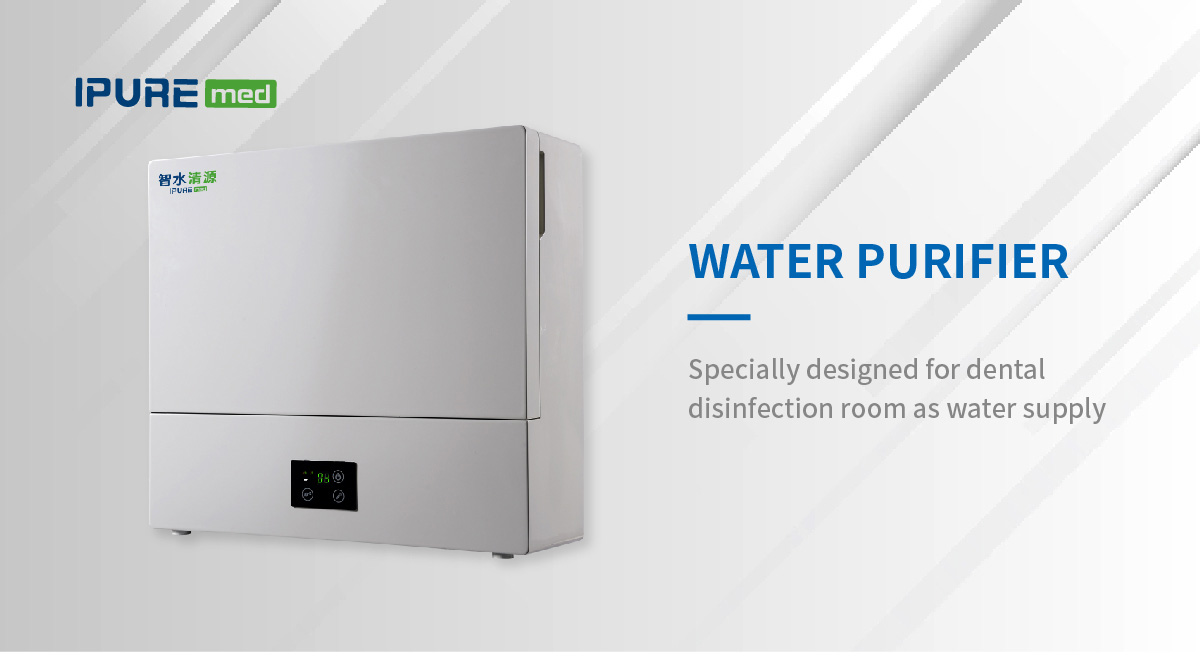
Pros: A professional-grade RO Water Purifier engineered for clinical use typically features a 3-stage or 5-stage filtration architecture. High-performance models deliver flow rates up to 1.5 liters per minute and integrate a final deionization resin cartridge to guarantee a stable output of 0 parts per million. These automated systems plumb directly into the local supply, providing an endless, hands-free supply of highly purified fluid. This drastically lowers the cost-per-gallon compared to buying bottled jugs and entirely eliminates the manual labor of refilling tanks.
Cons: Filtration systems require an initial upfront capital investment for the equipment and professional installation. They also require periodic maintenance, such as changing pre-filters and the central membrane annually. However, the return on investment is typically realized within the first year through labor savings and the total elimination of bottled purchasing costs.
Global health organizations and equipment manufacturers have established strict analytical standards to ensure consistent safety and equipment longevity. High-pressure steam sterilization is a precise science. Ignoring these empirical benchmarks exposes your facility to significant financial and regulatory risks.
Every medical and laboratory sterilizer comes with a highly specific set of operational guidelines. These manuals dictate the exact physical and chemical properties of the fluid that must be fed into the generator.
It is a common, costly misconception that any clear liquid is safe for use. Introducing a supply that falls outside the specified purity range is a leading cause of premature failure. More importantly, using improper sources will almost universally void the manufacturer warranty. When a service technician inspects a malfunctioning unit, the presence of internal corrosion or sensor degradation immediately points to operator negligence. The facility is then left entirely responsible for the exorbitant cost of replacement parts, labor, and potentially replacing the entire unit.
Beyond individual brand requirements, global health and safety standards strictly regulate maximum allowable contaminant limits. The European Standards EN 13060 for small steam sterilizers and EN 285 for large clinical sterilizers are widely recognized as international benchmarks for operational safety.
These stringent guidelines dictate that the feed supply must be virtually free of heavy metals, chlorides, silicates, and other dissolved solids. Even trace amounts of these contaminants can vaporize, transfer to the surgical load, and compromise patient safety. Adhering to these standards is not merely a suggestion. It is a strict regulatory requirement for passing health and safety audits in many jurisdictions.
Even in well-maintained facilities, operational hiccups occasionally arise. When a machine malfunctions or instruments emerge looking damaged, operators frequently blame mechanical components. However, empirical data shows that a significant percentage of these issues stem directly from the fluid utilized. Use this actionable checklist to diagnose physical symptoms and trace the problem back to specific impurities.
Observed Symptom | Probable Root Cause | Actionable Solution |
|---|---|---|
White chalky residue on chamber walls | High calcium or magnesium levels indicating hard water and scale buildup. | Drain the reservoir immediately. Descale the chamber per manufacturer guidelines and switch to a purified source. |
Rusty or pitted stainless steel instruments | High chloride levels in the feed supply actively attacking the passivation layer. | Discard heavily pitted instruments. Test source for chlorides. Ensure filtration membranes are functioning correctly. |
Water Quality Error Code on display | High electrical conductivity indicating dissolved solids have exceeded safety thresholds. | If using a filtration system, the membrane or deionization resin is exhausted. Replace the purification cartridges immediately. |
Unusually long heating times or aborted cycles | Mineral accumulation is insulating the internal heating elements or temperature sensors. | Schedule a professional technician for deep internal descaling. Verify that tap sources are not being accidentally used. |
Understanding the severe dangers of poor liquid quality is only the first step. The critical operational decision lies in choosing the right preventative solution. While purchasing plastic jugs is a viable short-term fix, it presents logistical nightmares and escalating costs for growing practices.
Not all filtration systems are created equal. A standard under-sink drinking filter is entirely inadequate for medical requirements. It merely improves taste and removes large particulates, leaving dissolved minerals completely intact. Decision-makers must look for multi-stage purification technology capable of reducing mineral content to near absolute zero.
A high-quality medical system should include robust sediment filtration to trap dirt and activated carbon blocks to remove membrane-destroying chlorine. The core Reverse Osmosis membrane must strip away 99 percent of dissolved solids. Crucially, it must feature a final Deionization resin stage. Because clinical machines require absolute purity, this final polishing stage captures the remaining trace ions to deliver laboratory-grade fluid with zero parts per million. Additionally, you must match the purifier daily flow rate capacity, such as a 50 Gallon Per Day rating, to your clinic consumption volume to prevent operational bottlenecks.
The decision to install dedicated purification equipment should be viewed strictly through the lens of Return on Investment. While there is an initial capital expenditure to purchase and install the equipment, the financial payback is rapid, multi-faceted, and undeniable.
First, consider the total elimination of bottled purchasing costs. Buying, shipping, and storing hundreds of gallons annually represents a massive recurring expense. An automated system plummets the cost-per-gallon to mere pennies. Second, consider the drastic reduction in manual labor. Staff no longer need to monitor inventory, carry heavy jugs from storage rooms, or manually pour fluids into the reservoir. This tedious process often leads to workplace injuries and spills.
Ultimately, the most substantial financial benefit is total risk mitigation. Eliminating scale and corrosive chlorides drastically reduces machine downtime. It eliminates expensive emergency repair bills and extends the lifespan of your surgical and laboratory instruments by years. Proper treatment is not an operational expense; it is a vital insurance policy for your most valuable equipment.
An autoclave is a massive capital investment. Its daily performance remains inextricably linked to the liquid flowing through its valves. Compromising on purity to save a few dollars upfront inevitably leads to thousands of dollars in equipment damage, voided warranties, and compromised patient safety later.
Stop using tap sources immediately to protect your clinic assets. We strongly encourage you to test your current supply today, discard inefficient bottled methods, and upgrade your facility with a dedicated, automated purification system. For reliable, medical-grade filtration solutions tailored specifically to dental and clinical environments, explore the advanced systems available at Yeson Medicine. Taking this proactive step guarantees flawless operational efficiency, protects your expensive instruments, and ensures absolute efficacy during every single cycle.
No, boiled tap water is highly detrimental to your machine. While boiling successfully kills biological pathogens like bacteria and viruses, it does absolutely nothing to remove dissolved minerals, salts, or heavy metals. In fact, the boiling process causes pure molecules to evaporate, which actively concentrates the remaining calcium, magnesium, and chlorides in the liquid left behind. Using boiled sources will rapidly accelerate scale accumulation on your heating elements, clog your valves, and lead to immediate equipment failure.
Both deionized and distilled options lack the harmful minerals that damage internal components, making both perfectly safe for sterilization use. The difference lies entirely in the purification process. Distillation is a thermal process where liquid is boiled into steam, leaving impurities behind, and then condensed back into a pure fluid. Deionization is a chemical process that runs fluid through electrically charged resin beds, which exchange hydrogen and hydroxyl ions for dissolved mineral ions. For maximum purity and operational efficiency, modern facilities often use a reverse osmosis system paired with a deionization filter, combining the best of physical and chemical purification to achieve absolute purity.
Even if you are exclusively using high-quality fluid from an automated purification system, routine preventative maintenance remains absolutely essential. Manufacturers generally recommend performing a thorough chamber cleaning on a weekly or monthly basis, depending heavily on your cycle volume. While pure sources prevent mineral scale from forming, residues from the items being sterilized—such as biological debris, oils from instrument lubricants, or chemical residue from wraps and pouches—can still accumulate inside the chamber. Regular cleaning ensures these external contaminants do not bake onto the sensors or compromise machine longevity.
Yes, without exception. Most major manufacturers include explicit, non-negotiable clauses in their warranty documentation stating that any damage caused by poor liquid quality is not covered. When a service technician inspects a failed unit, the presence of calcium scale, chloride-induced pitting, or sensor calcification provides undeniable empirical proof that an improper source was used. If your warranty is voided due to hard water usage, your facility will be fully liable for all diagnostic fees, replacement parts, and labor costs, which can easily amount to thousands of dollars.
The most objective and accurate way to monitor your purifier filter life is by using a digital Total Dissolved Solids meter. This handheld device measures the electrical conductivity of the fluid to determine the concentration of dissolved minerals, displaying a precise reading in parts per million. You should test your purified supply weekly. If the reading rises above the threshold recommended by your manufacturer—usually anything greater than 3 to 5 parts per million—it indicates that your central membrane or deionization resin is exhausted and can no longer effectively strip contaminants. At this point, the filters must be replaced immediately to protect your sterilization equipment.
Running a sterilization cycle with an empty reservoir triggers a dangerous dry-fire scenario. Modern units are equipped with emergency thermal cut-off switches designed to halt the cycle and prevent catastrophic fires. However, repeated dry-cycles will severely warp the internal heating elements and permanently damage the chamber integrity. Utilizing an automated direct-plumbed filtration system completely eliminates this risk by ensuring the reservoir remains constantly filled to the precise required level.
The most reliable method for testing clinic supply is utilizing a digital Total Dissolved Solids meter. This inexpensive handheld tool measures electrical conductivity to reveal the exact concentration of dissolved minerals in parts per million. Simply draw a sample from your current reservoir or storage jug and insert the probe. If the digital display reads anything above 3 to 5 parts per million, your supply is heavily contaminated and poses an immediate threat to your sterilization equipment.