Views: 30 Author: Site Editor Publish Time: 2026-04-13 Origin: Site


Ultrasonic cleaning has become an essential process in industries that require precision, consistency, and efficiency. An Ultrasonic Cleaner uses high-frequency sound waves to generate cavitation bubbles that remove contaminants such as grease, oil, dust, and microscopic residues from surfaces. This method is widely used because it can clean complex geometries that traditional methods cannot effectively reach.
When selecting an Ultrasonic Cleaner, one of the most important considerations is whether to choose a single-tank Ultrasonic Cleaner or a dual-tank Ultrasonic Cleaner. Each Ultrasonic Cleaner configuration offers different advantages depending on the cleaning requirements, workflow, and level of cleanliness needed. A single-tank Ultrasonic Cleaner is typically used for basic cleaning, while a dual-tank Ultrasonic Cleaner introduces multi-stage processing such as rinsing and drying.
Understanding the differences between these Ultrasonic Cleaner systems is essential for achieving optimal cleaning results. The right Ultrasonic Cleaner configuration not only improves cleaning performance but also enhances workflow efficiency and reduces long-term operational costs.
● A single-tank Ultrasonic Cleaner is suitable for basic cleaning tasks
● A dual-tank Ultrasonic Cleaner enables multi-stage cleaning processes
● Ultrasonic Cleaner selection depends on workflow and contamination level
● Multi-tank Ultrasonic Cleaner systems improve cleaning consistency
● Dual-tank Ultrasonic Cleaner systems are ideal for high-standard applications
A single-tank Ultrasonic Cleaner consists of one cleaning chamber equipped with ultrasonic transducers that generate high-frequency vibrations. These vibrations are transferred into the cleaning liquid, creating cavitation bubbles that perform the cleaning action. The simplicity of a single-tank Ultrasonic Cleaner makes it easy to install and operate in various environments.
The design of a single-tank Ultrasonic Cleaner focuses on efficiency and ease of use. Since all cleaning processes occur in one tank, there is no need for additional equipment or complex setup. This makes the single-tank Ultrasonic Cleaner a practical option for small-scale operations or routine cleaning tasks.
In addition, the compact size of a single-tank Ultrasonic Cleaner allows it to be integrated into limited workspace environments. This makes it a flexible solution for laboratories, workshops, and maintenance facilities where space and simplicity are important factors.
The cleaning process in a single-tank Ultrasonic Cleaner begins with immersing items into the cleaning solution. Once activated, the Ultrasonic Cleaner generates cavitation bubbles that collapse and release energy, effectively dislodging contaminants from surfaces and internal structures. This process is highly efficient and ensures uniform cleaning.
However, because the entire process takes place in one tank, the Ultrasonic Cleaner does not separate cleaning and rinsing stages. This means that contaminants removed during cleaning may remain suspended in the solution, potentially redepositing on the surface if not properly managed.
For this reason, while a single-tank Ultrasonic Cleaner is effective for removing visible dirt and debris, additional manual rinsing may be required to achieve higher levels of cleanliness. This limitation should be considered when evaluating the suitability of a single-tank Ultrasonic Cleaner.
A single-tank Ultrasonic Cleaner is commonly used in applications where cleaning requirements are relatively simple. These include jewelry cleaning, small mechanical components, laboratory glassware, and basic maintenance tasks. In these scenarios, a single-stage Ultrasonic Cleaner provides sufficient performance.
The versatility of a single-tank Ultrasonic Cleaner allows it to handle a variety of materials, including metals, plastics, and glass. This adaptability makes it a widely used solution across different industries.
For environments that do not require strict contamination control, a single-tank Ultrasonic Cleaner offers a cost-effective and reliable cleaning solution. Its straightforward operation and consistent results make it suitable for everyday cleaning needs.
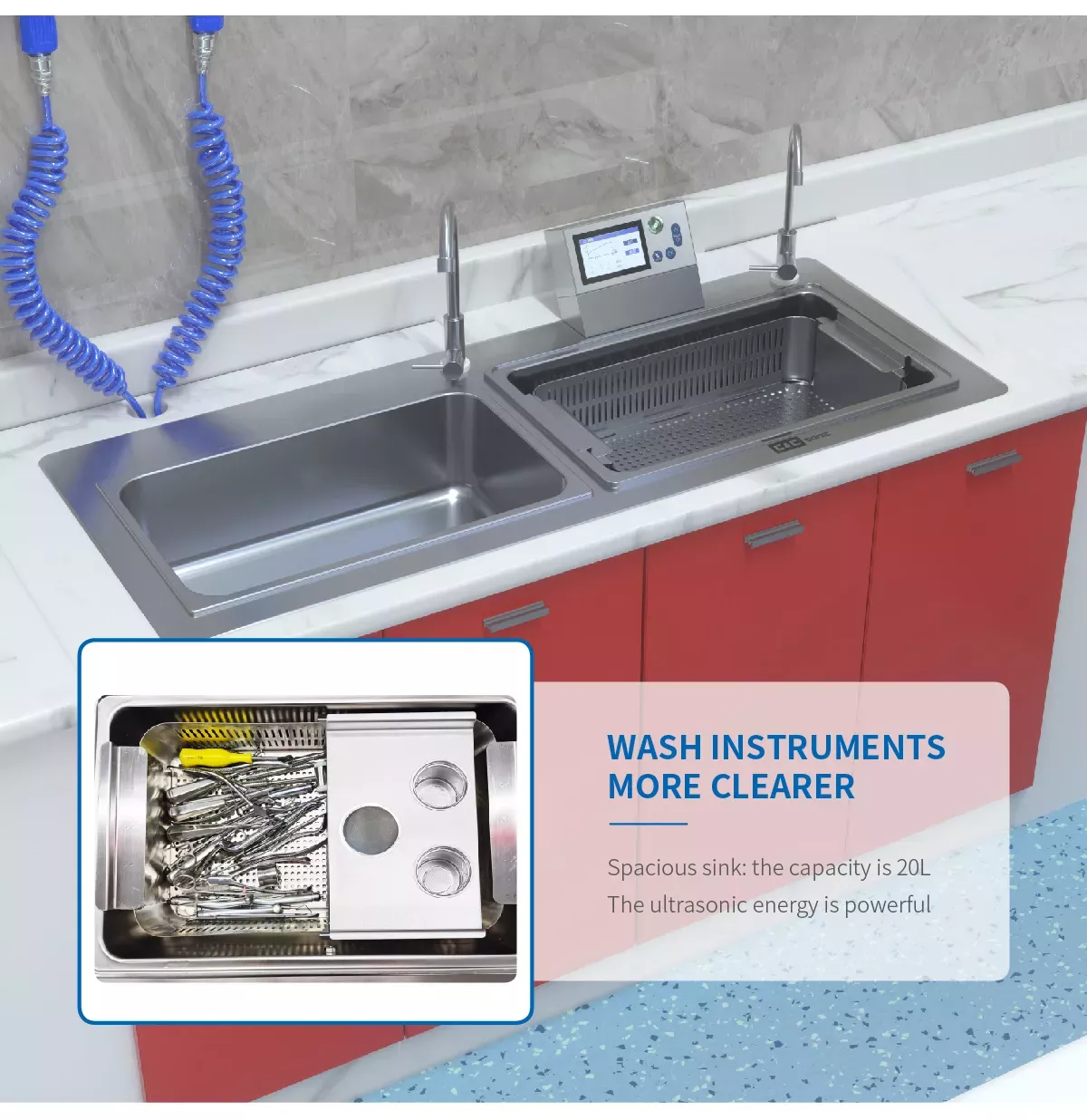
A dual-tank Ultrasonic Cleaner consists of two separate tanks, each designed for a specific stage in the cleaning process. The first tank is used for ultrasonic cleaning, while the second tank is typically used for rinsing or additional processing. This separation allows for a more controlled and effective cleaning workflow.
The multi-stage design of a dual-tank Ultrasonic Cleaner ensures that contaminants removed during cleaning are not reintroduced during subsequent stages. This improves overall cleaning quality and consistency.
By separating processes, a dual-tank Ultrasonic Cleaner provides a more advanced solution compared to a single-tank system. This makes it suitable for applications that require higher cleanliness standards.
One of the key advantages of a dual-tank Ultrasonic Cleaner is the integration of rinsing and, in some cases, drying functions. After the initial cleaning stage, items are transferred to the second tank to remove residual cleaning solution and remaining contaminants.
This additional step ensures that surfaces are free from chemical residues and loose particles. The rinsing stage enhances the effectiveness of the Ultrasonic Cleaner and prepares items for further processing if required.
In some configurations, a dual-tank Ultrasonic Cleaner may also include drying features. This further improves efficiency by reducing the need for manual handling and shortening the overall cleaning cycle.
A dual-tank Ultrasonic Cleaner is widely used in industries that require consistent and high-quality cleaning results. These include medical, dental, laboratory, and industrial manufacturing environments. In these settings, the Ultrasonic Cleaner must deliver reliable performance under demanding conditions.
The ability of a dual-tank Ultrasonic Cleaner to perform multi-stage cleaning makes it suitable for complex components and precision equipment. It ensures that contaminants are completely removed without compromising material integrity.
For high-volume operations, a dual-tank Ultrasonic Cleaner improves workflow efficiency by allowing continuous processing. This makes it a preferred choice for professional applications.
The primary difference between a single-tank Ultrasonic Cleaner and a dual-tank Ultrasonic Cleaner lies in their structure and functionality. A single-tank Ultrasonic Cleaner performs all cleaning processes within one chamber, while a dual-tank Ultrasonic Cleaner separates these processes into different stages.
This structural difference significantly impacts cleaning performance. A dual-tank Ultrasonic Cleaner provides better control over each stage, resulting in improved cleaning outcomes.
The choice between these Ultrasonic Cleaner types depends on the level of cleaning required and the complexity of the application.
Feature | Single-Tank Ultrasonic Cleaner | Dual-Tank Ultrasonic Cleaner |
Cleaning Process | Single-stage | Multi-stage |
Efficiency | Moderate | High |
Residue Removal | Limited | Enhanced |
Automation Level | Basic | Advanced |
Application Range | Simple tasks | Complex tasks |
This comparison clearly demonstrates that a dual-tank Ultrasonic Cleaner offers higher efficiency and better cleaning consistency than a single-tank Ultrasonic Cleaner.
A single-tank Ultrasonic Cleaner is generally more affordable and requires less maintenance. This makes it suitable for small operations or applications with limited cleaning requirements.
A dual-tank Ultrasonic Cleaner involves higher initial investment but provides greater efficiency and improved cleaning quality. Over time, the enhanced performance of a dual-tank Ultrasonic Cleaner can offset its higher cost.
Selecting the right Ultrasonic Cleaner requires balancing cost, performance, and operational needs.
A single-tank Ultrasonic Cleaner is ideal for applications that require basic cleaning without additional processing stages. It is suitable for low-volume operations and items that do not require strict cleanliness standards.
This type of Ultrasonic Cleaner is commonly used in workshops, small laboratories, and maintenance environments. It provides reliable cleaning performance while maintaining simplicity and cost efficiency.
If the cleaning process does not require rinsing or drying, a single-tank Ultrasonic Cleaner can meet operational needs effectively.
A dual-tank Ultrasonic Cleaner is the preferred choice for applications that require higher cleaning standards and multi-stage processing. It ensures thorough removal of contaminants and minimizes residue.
This Ultrasonic Cleaner type is widely used in professional environments where consistency and reliability are essential. The additional stages improve cleaning quality and reduce the risk of contamination.
For operations that require continuous processing and high efficiency, a dual-tank Ultrasonic Cleaner provides significant advantages.
Workflow requirements play a critical role in selecting the right Ultrasonic Cleaner. Factors such as batch size, cleaning frequency, and contamination level should be considered.
A single-tank Ultrasonic Cleaner is suitable for simple workflows, while a dual-tank Ultrasonic Cleaner supports more complex and high-volume operations.
Evaluating workflow requirements ensures that the selected Ultrasonic Cleaner delivers optimal performance and efficiency.

An Ultrasonic Cleaner is widely used in healthcare environments to clean surgical tools and medical devices. The Ultrasonic Cleaner removes contaminants before sterilization processes, ensuring proper hygiene.
The precision and consistency of an Ultrasonic Cleaner make it suitable for handling delicate and complex instruments. It ensures that all surfaces are thoroughly cleaned.
In dental and laboratory settings, an Ultrasonic Cleaner is used to clean precision instruments and glassware. The Ultrasonic Cleaner provides gentle cleaning without damaging sensitive components.
These applications rely on the ability of the Ultrasonic Cleaner to remove contaminants effectively while preserving material integrity.
Industrial applications use an Ultrasonic Cleaner to clean components such as engine parts, molds, and precision tools. The Ultrasonic Cleaner improves efficiency and ensures thorough cleaning.
The versatility of an Ultrasonic Cleaner allows it to adapt to various industrial cleaning requirements.
Application Type | Recommended Ultrasonic Cleaner | Reason |
Jewelry | Single-Tank Ultrasonic Cleaner | Simple cleaning |
Dental | Dual-Tank Ultrasonic Cleaner | Higher hygiene |
Medical | Dual-Tank Ultrasonic Cleaner | Multi-stage cleaning |
Industrial | Dual-Tank Ultrasonic Cleaner | High efficiency |
A dual-tank Ultrasonic Cleaner provides consistent cleaning results by separating cleaning stages. This ensures that contaminants are removed effectively at each stage.
The structured process of a dual-tank Ultrasonic Cleaner reduces variability and improves overall cleaning performance.
The rinsing stage in a dual-tank Ultrasonic Cleaner prevents contaminants from being redeposited on surfaces. This improves the overall cleanliness of the process.
By eliminating residues, the Ultrasonic Cleaner ensures higher hygiene standards.
A dual-tank Ultrasonic Cleaner allows continuous operation, enabling multiple batches to be processed efficiently. This reduces downtime and increases productivity.
The improved workflow efficiency makes a dual-tank Ultrasonic Cleaner suitable for demanding environments.
Selecting an Ultrasonic Cleaner based solely on price may result in inadequate performance. A lower-cost Ultrasonic Cleaner may not meet the requirements of complex cleaning tasks.
Failing to evaluate cleaning requirements can lead to selecting the wrong Ultrasonic Cleaner. Each Ultrasonic Cleaner type is designed for specific applications.
Workflow plays a critical role in Ultrasonic Cleaner selection. Choosing an Ultrasonic Cleaner without considering workflow can reduce efficiency.
Choosing between a single-tank Ultrasonic Cleaner and a dual-tank Ultrasonic Cleaner depends on cleaning complexity, workflow, and efficiency requirements. A single-tank Ultrasonic Cleaner is suitable for basic cleaning, while a dual-tank Ultrasonic Cleaner provides advanced multi-stage cleaning.
As cleaning demands continue to evolve, selecting the right Ultrasonic Cleaner ensures consistent performance and operational efficiency. NINGBO HAISHU YESON MEDICAL DEVICE CO., LTD provides ultrasonic cleaning solutions designed to meet the needs of modern industries.
A single-tank Ultrasonic Cleaner performs basic cleaning, while a dual-tank Ultrasonic Cleaner includes additional stages such as rinsing.
A dual-tank Ultrasonic Cleaner is better for applications that require higher cleaning standards and efficiency.
A single-tank Ultrasonic Cleaner is suitable for basic tasks but may not meet the needs of complex cleaning processes.
A dual-tank Ultrasonic Cleaner is generally preferred for industrial applications due to its efficiency and performance.