Views: 0 Author: Site Editor Publish Time: 2026-03-05 Origin: Site


A single unsterilized tool can risk many patients. Many clinics struggle between budget limits and safety standards. A high-quality veterinary autoclave solves this challenge through reliable steam sterilization.
In this article, you will learn the top 7 benefits of using a veterinary autoclave and how it improves safety, efficiency, and long-term clinic growth.
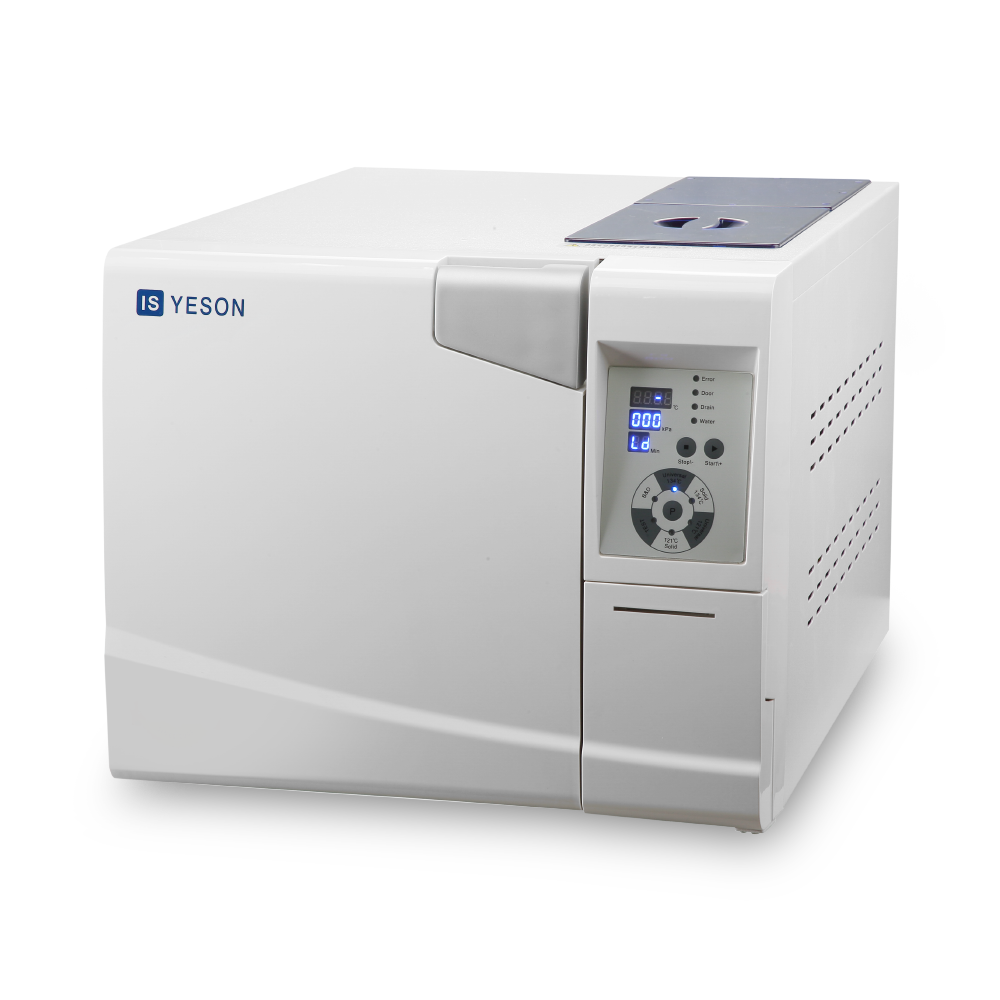
Infection prevention stands at the core of veterinary medicine because surgical instruments frequently come into contact with blood, tissue, and bodily fluids that may harbor harmful microorganisms. A high-quality veterinary autoclave ensures reliable microbial elimination through precise control of temperature, pressure, and exposure time, which are critical factors for destroying bacteria, viruses, fungi, and highly resistant spores such as Geobacillus stearothermophilus (validation required). Unlike basic sterilization units that may experience temperature fluctuations or incomplete air removal, premium systems use advanced pre-vacuum cycles that remove trapped air before steam enters the chamber, allowing steam to penetrate wrapped packs, porous materials, and narrow lumen instruments more effectively.
When steam cannot fully contact every surface, sterilization remains incomplete and infection risk increases, which is why air removal efficiency and consistent cycle validation are essential. High-quality systems also support sterility assurance levels aligned with recognized international standards such as ISO 17665 and EN 13060 where applicable, providing confidence that each cycle achieves documented sterilization performance. By reducing cross-contamination risk in surgical and dental procedures, a reliable veterinary autoclave becomes a fundamental component of patient safety management.
Operational efficiency directly affects clinical productivity because instrument shortages can delay surgeries and reduce daily patient capacity. Modern veterinary autoclave systems are engineered for optimized heating, exposure, and drying phases that significantly reduce total cycle time compared to older or low-end units. Typical sterilization cycles range between 20 and 40 minutes depending on load configuration (validation required), and efficient drying systems ensure instruments emerge ready for immediate storage or reuse without excess moisture.
Automation plays an important role in workflow improvement because staff can load instruments, select preset cycles, and return to patient care without constant supervision. This reduces labor intensity, lowers monitoring errors, and supports consistent performance across multiple cycles each day. In high-demand environments, flash sterilization cycles provide rapid processing for urgent situations, though standard wrapped cycles remain the preferred method for long-term sterility assurance. By minimizing downtime and preventing bottlenecks, a high-quality veterinary autoclave strengthens overall operational continuity.
Although premium sterilization systems often involve higher upfront investment, total cost of ownership reveals a different financial picture when evaluated over five or more years. A high-quality veterinary autoclave reduces recurring expenses associated with disposable instrument purchases, frequent hazardous waste disposal, and premature instrument replacement caused by corrosion or improper drying. Lower-end systems may experience inconsistent temperature control or inadequate moisture removal, which can damage expensive surgical tools and increase replacement frequency.
The following simplified comparison illustrates the long-term financial difference:
Cost Factor | Low-End Unit | High-Quality Veterinary Autoclave |
Initial Purchase Cost | Lower | Higher |
Breakdown Frequency | Higher | Lower |
Instrument Damage | More Common | Less Frequent |
Maintenance Costs | Unpredictable | More Stable |
Long-Term ROI | Limited | Stronger |
When clinics calculate energy use, maintenance, downtime, and instrument lifespan, the return on investment from a durable veterinary autoclave often exceeds expectations (validation required). Financial sustainability depends not only on purchase price but on consistent performance and reduced operational disruptions.
Conduct a multi-year cost analysis rather than focusing solely on initial pricing when comparing sterilization systems.
Regulatory expectations for infection control continue to evolve, and veterinary clinics must maintain clear documentation of sterilization performance to reduce liability exposure. A high-quality veterinary autoclave supports digital cycle logs, physical monitoring data, chemical indicator tracking, and biological spore testing records that demonstrate compliance with recognized sterilization standards. Biological indicators remain the most reliable validation method because they confirm the destruction of highly resistant spores under real operating conditions.
Comprehensive documentation protects clinics during inspections, accreditation processes, or legal disputes related to infection incidents. Without proper cycle validation and recordkeeping, clinics may face regulatory penalties or reputational damage. By integrating monitoring systems into daily operations, a high-quality veterinary autoclave strengthens compliance management and reduces long-term risk.
Establish weekly biological indicator testing to reinforce sterilization validation and regulatory compliance.
Veterinary practices handle diverse instrument types that require different sterilization approaches, including surgical kits, dental handpieces, textiles, metal trays, and certain biohazard waste materials. A versatile veterinary autoclave accommodates these variations through adjustable cycle parameters and load-specific programs that ensure proper sterilization without damaging equipment. Gravity displacement systems may process simple solid instruments effectively, while pre-vacuum models provide superior performance for wrapped or porous materials and narrow lumen devices.
Selecting the correct cycle for each load type is essential because liquid cycles differ from solid cycles and flash cycles differ from wrapped storage cycles. Versatility allows clinics to manage multiple clinical applications using a single reliable system rather than investing in additional equipment. This flexibility enhances operational efficiency while maintaining high sterilization standards.
Match your autoclave class to the most complex load your clinic processes regularly to ensure complete sterilization.
High-pressure steam sterilization involves elevated temperatures and internal chamber pressure, which means safety features are critical to protect personnel. Modern veterinary autoclave systems incorporate automatic door locking mechanisms, pressure interlocks, temperature sensors, and controlled depressurization systems that prevent accidental exposure during active cycles. These safeguards reduce workplace accidents and create a predictable sterilization environment where staff can operate confidently.
On-site sterilization also improves safety in waste handling because contaminated materials can be treated before disposal, minimizing pathogen exposure during transport. A controlled sterilization process enhances overall clinic safety culture and supports consistent operational standards.
Verify door interlock systems and safety certifications before finalizing a veterinary autoclave purchase.
Clients may not directly observe sterilization processes, but they value evidence of hospital-grade hygiene standards. Investing in a high-quality veterinary autoclave demonstrates commitment to professional accountability and patient safety, which strengthens trust among pet owners. Clinics can communicate sterilization protocols during consultations, display documentation practices, or highlight compliance measures in marketing materials to reinforce credibility.
Professional image influences referral rates, client retention, and competitive positioning within the local market. When clients perceive a clinic as safe and modern, they are more likely to return for future care. A premium veterinary autoclave therefore contributes not only to clinical performance but also to long-term brand reputation.
Transparently communicating sterilization practices enhances client confidence and differentiates your clinic from competitors.
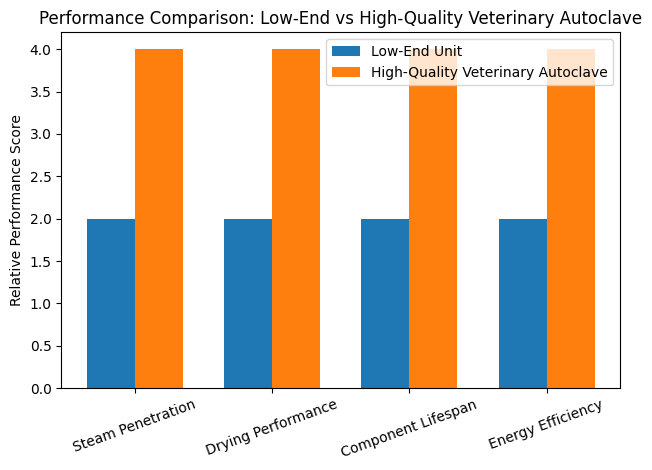
Performance differences between systems often become apparent over time, as low-end units may struggle with consistent air removal, deep steam penetration, or efficient drying. High-quality veterinary autoclave models maintain stable parameters across repeated cycles, ensuring reliable sterilization even under heavy daily use.
Premium systems typically feature corrosion-resistant stainless steel chambers, durable seals, and reliable heating elements that extend operational lifespan. In contrast, lower-quality components may degrade faster, leading to frequent repairs and downtime. Preventive maintenance remains necessary for all systems, but durable construction reduces unexpected failures.
Energy efficiency directly impacts operating expenses because sterilization cycles run multiple times per day in busy clinics. Efficient heating systems reduce electricity consumption while maintaining performance standards. Frequent breakdowns or inefficient heating can increase both energy and repair costs.
Performance Area | Low-End Unit | High-Quality Veterinary Autoclave |
Steam Penetration | Moderate | High |
Drying Performance | Variable | Consistent |
Component Lifespan | Shorter | Longer |
Energy Efficiency | Lower | Higher |
Request documented energy consumption and maintenance data before selecting your sterilization system.
Some clinics hesitate due to the perceived high initial investment; however, long-term operational savings often justify the cost when reduced downtime, lower waste expenses, and improved instrument longevity are considered (validation required). Start-up clinics may explore refurbished options, but they should carefully verify maintenance history, warranty coverage, and compliance certifications before purchase. Proper staff training, routine inspection, and disciplined load preparation are essential to maintain performance regardless of the system selected.
Always confirm service support availability and warranty terms before finalizing a purchase.
The top 7 benefits of using a high-quality veterinary autoclave extend beyond simple sterilization because they include superior infection control, faster workflow, stronger regulatory compliance, enhanced safety, operational versatility, cost efficiency, and improved client trust. As a trusted supplier of veterinary sterilization equipment, NINGBO HAISHU YESON MEDICAL DEVICE CO., LTD. provides high-performance veterinary autoclave solutions designed to meet modern clinical standards and long-term operational needs. While lower-cost options may seem appealing initially, hidden expenses associated with breakdowns, inconsistent sterilization, and compliance risks can outweigh short-term savings. A well-chosen veterinary autoclave strengthens clinical standards, protects patients and staff, and supports sustainable business growth. Investing in reliable sterilization technology from an experienced supplier ultimately represents an investment in your clinic’s long-term safety, credibility, and professional success.
A: A high-quality veterinary autoclave is a steam sterilizer designed to deliver consistent, validated sterilization for surgical and dental instruments in animal clinics.
A: A veterinary autoclave eliminates bacteria and spores through high-pressure steam, reducing cross-contamination and protecting patient safety.
A: A veterinary autoclave shortens cycle times and automates sterilization, helping staff return instruments to service faster.
A: A premium veterinary autoclave reduces breakdowns, waste costs, and instrument damage, improving long-term return on investment.
A: A high-quality veterinary autoclave offers better air removal, drying performance, durability, and compliance documentation support.
A: If a veterinary autoclave fails, inspect water quality, load placement, door seals, and indicator results before calling service.